The Ultimate Guide to Buying and Caring for the Best 35mm SLR Film Cameras
TK Broecker / 5 April 2026
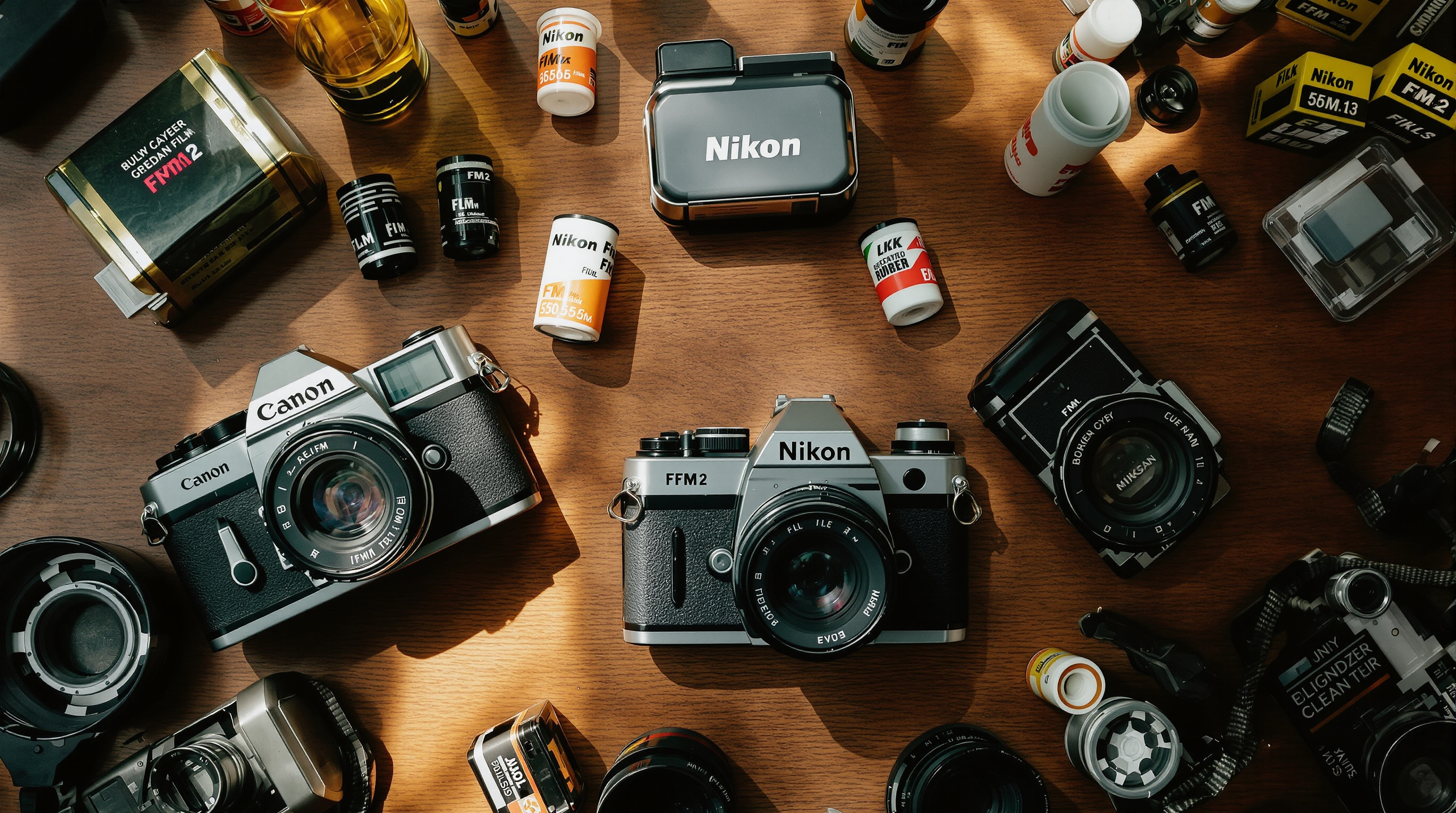
Film photography is experiencing a powerful revival. Whether you're a seasoned shooter returning to analog roots or a newcomer drawn to the warmth and tactility of 35mm, the world of vintage SLR cameras offers something truly special. From iconic models like the Canon AE-1 and Nikon FM2 to practical advice on buying used, storing film, and finding repair services, this guide covers everything you need.
The Best 35mm SLR Cameras Worth Buying
When it comes to the best 35mm SLR cameras, a few models have stood the test of time and remain highly sought after:
- Canon AE-1 – Introduced in 1976, the AE-1 was the first camera to use a Central Processing Unit (CPU) in its design. It features aperture-priority and shutter-priority automatic exposure, making it extremely beginner-friendly while still rewarding for experienced shooters. It accepts Canon FD-mount lenses.
- Nikon FM2 – A fully mechanical marvel launched in 1982, the FM2 was legendary for its 1/4000s maximum shutter speed and flash sync at 1/200s (later models at 1/250s). It is built to near-indestructible standards and is prized by professionals and enthusiasts alike.
- Pentax K1000 – A fully mechanical, all-metal camera known for its extreme durability and simplicity. Manufactured from 1976 to 1997, it is beloved in academic and educational photography settings.
- Olympus OM-1 – Compact and lightweight for its era, the OM-1 offered professional-grade performance in a smaller body, with a wide range of Zuiko lenses available.
- Minolta X-700 – Often overlooked, it offered sophisticated metering and a vast lens ecosystem, making it an excellent value on the used market.
Canon AE-1 vs Nikon FM2 — Which Should You Choose?
This is one of the most debated comparisons in film photography. Both cameras are excellent, but they serve slightly different needs:
- Automation: The AE-1 features automatic exposure modes, making it more approachable for beginners. The FM2 is fully manual and fully mechanical — it doesn't even need a battery to fire the shutter.
- Build quality: Both are solid, but the FM2's all-metal construction gives it a slight edge in durability. The AE-1 uses more plastic components.
- Lens ecosystem: Nikon's F-mount has been in continuous production since 1959, offering a huge range of compatible lenses. Canon's FD mount was discontinued in 1987 when Canon switched to the EF mount.
- Price: The AE-1 tends to be slightly more affordable on the used market due to higher production volumes, though demand has driven prices up for both models in recent years.
- Best for: Choose the AE-1 if you want ease of use and budget flexibility. Choose the FM2 if you want a professional-grade, fully mechanical workhorse.
How to Buy Used Film Cameras — A Vintage SLR Guide
Buying a used film camera requires some care. Here's how to make a smart purchase:
- Check the shutter: Listen for smooth, consistent shutter sounds across all speeds. Sticky or sluggish shutters are a common issue in aging cameras and may need a CLA (Clean, Lubricate, Adjust) service.
- Inspect the light seals: Foam light seals degrade over time and cause light leaks. Replacement is inexpensive but necessary on most cameras over 20 years old.
- Examine the mirror and viewfinder: Look for fungus, haze, or scratches on the mirror and optics. Minor dust is acceptable; fungus is not.
- Test the meter: If the camera has a built-in light meter, test it with fresh batteries and compare readings to a known source.
- Buy from reputable sources: Platforms like KEH Camera, MPB, eBay (with seller reviews), and local camera shops offer varying degrees of buyer protection. KEH in particular grades equipment transparently.
Always request photos of the shutter blades, mirror box, and film compartment before purchasing online.
Film Storage, Analog Camera Care, and Repair in Kentucky
Owning a film camera is only part of the journey — maintaining it and storing your film correctly is equally important.
Used Film Storage Tips:
- Store unused film in a cool, dry place — ideally in a refrigerator at around 55°F (13°C) or lower. Avoid freezing unless storing for very long periods.
- Keep film in its original sealed canisters until ready to use. Humidity and heat accelerate chemical degradation, especially in color and slide films.
- Allow refrigerated film to reach room temperature (about 1–2 hours) before opening to prevent condensation on the emulsion.
- Expired film can still produce interesting results but expect increased grain, color shifts, and reduced sensitivity — expose it 1 stop more per decade past expiry as a general rule.
Analog Camera Care Guide:
- Replace light seals every 10–15 years or when you notice light leaks in your images.
- Use a blower brush (not compressed air) to clean mirror boxes and lens surfaces.
- Store cameras with the shutter uncocked to reduce spring tension over time.
- Remove batteries during long-term storage to prevent corrosion damage.
- A professional CLA service every few years keeps mechanisms running smoothly and preserves camera longevity.
Film Camera Repair in Kentucky:
If you're based in Kentucky and need professional analog camera repair, several options exist. Local camera repair technicians and specialty shops can perform CLA services, shutter calibration, light seal replacement, and more. Cities like Louisville and Lexington have independent repair shops and camera stores that cater to the growing film photography community. Always ask for references, turnaround time estimates, and whether the technician has experience with your specific model before committing to a repair.
Conclusion
The world of 35mm SLR photography is rich, rewarding, and more accessible than ever. Whether you're weighing the Canon AE-1 against the Nikon FM2, hunting for a deal on a used Pentax or Olympus, or learning how to store film and maintain your gear, the key is knowledge and care. With the right camera, properly stored film, and a trusted repair technician nearby, your analog journey is just beginning.