Landscape Film Photography in Louisville – The Best Films and Tips for Stunning Analog Results
TK Broecker / 21 June 2026
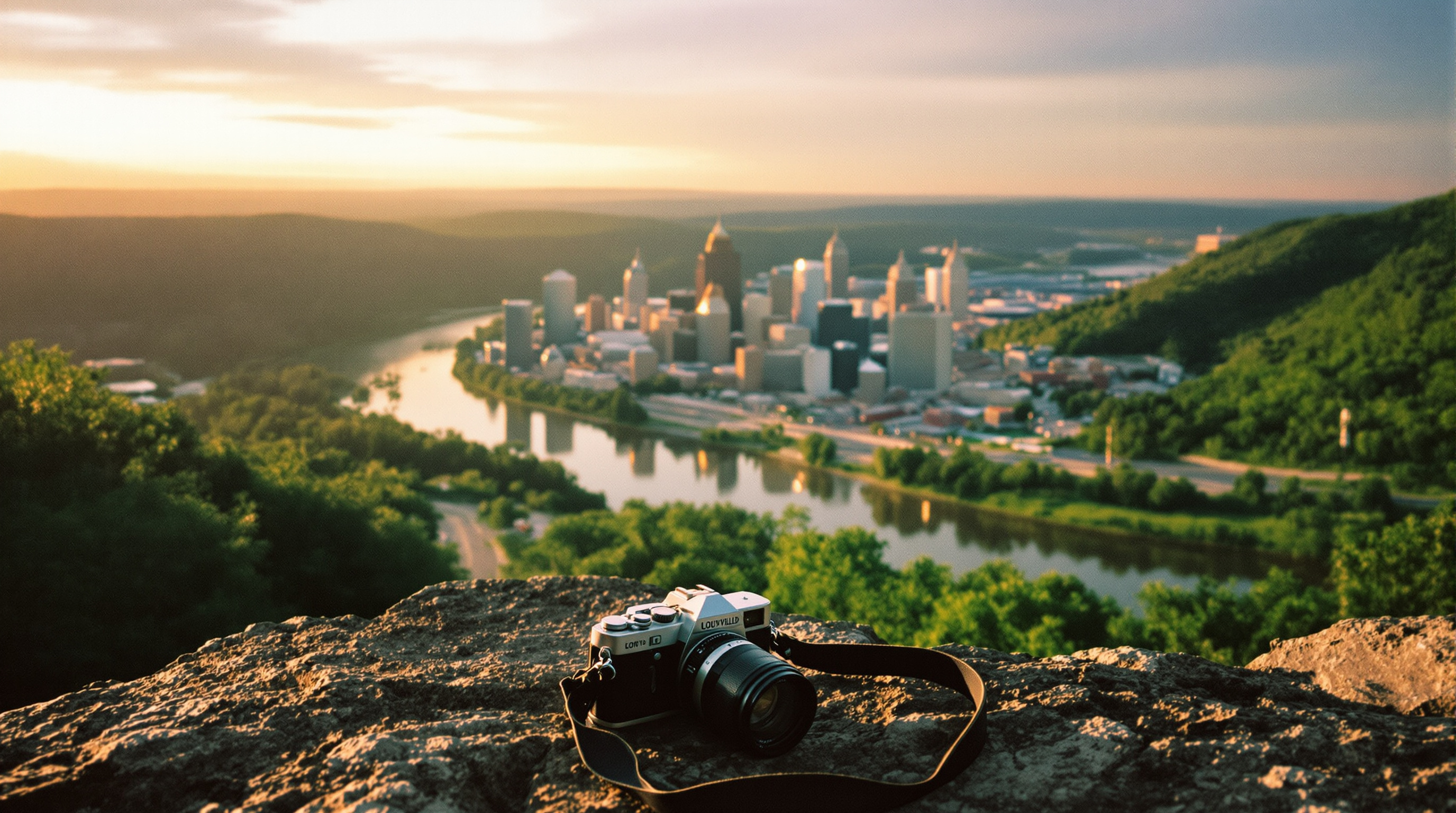
There is something undeniably magical about capturing Kentucky's sweeping landscapes on film. From the rolling bluegrass hills south of Louisville to the Ohio River's broad, shimmering expanse, analog photography rewards the patient shooter with a richness of tone and texture that digital struggles to replicate. Whether you are a seasoned film photographer or just starting out, choosing the right film stock and technique makes all the difference.
Why Louisville and Kentucky Are Perfect for Landscape Film Photography
Louisville sits at a geographic and atmospheric crossroads that makes it exceptionally rewarding for landscape photographers. The city borders the Ohio River, offering sweeping riverfront vistas, dramatic skies, and soft mist in the early mornings — all conditions that film handles beautifully. A short drive in any direction opens up the broader Kentucky landscape: the Knobs to the south, the gentle plateau of the Bluegrass Region to the east, and the forested hills of Bernheim Arboretum and Research Forest to the southeast.
Kentucky's climate delivers four distinct seasons, each offering unique photographic opportunities. Spring brings vibrant green fields and wildflowers. Summer gives you deep blue skies and rich foliage. Autumn transforms the state into a tapestry of amber, crimson, and gold. Winter produces stark, minimalist compositions with bare trees and frosted fields. Film photography, with its inherent grain structure and tonal rendering, is particularly well-suited to all of these moods.
Fuji Velvia – The Landscape Photographer's Icon
Fujifilm Velvia 50 (RVP 50) is arguably the most celebrated landscape film ever produced. First introduced in 1990, Velvia is a color reversal (slide) film that delivers extraordinarily saturated colors, especially in reds, greens, and oranges — the exact palette that defines Kentucky's natural scenery. Its ISO 50 speed requires more light and steady technique (a tripod is essentially mandatory), but the payoff is exceptional sharpness and almost zero grain at normal enlargement sizes.
When shooting around Louisville with Velvia, consider the following:
- Shoot during golden hour — Velvia's saturation can become overwhelming in harsh midday light, but it absolutely glows at sunrise and sunset along the Ohio River or in the open meadows of Bernheim Forest.
- Use a polarizing filter — This reduces glare from water and foliage and deepens the blue sky, working synergistically with Velvia's color rendering.
- Expose carefully — Slide film has a narrow latitude. Bracket your exposures by ±⅓ to ±½ stop to secure the best result.
- Velvia 100 offers a slightly less saturated but more flexible alternative with one extra stop of speed, useful under the variable Kentucky skies.
Kodak Ektar 100 – Vivid Color Negative Film for Kentucky Landscapes
If slide film feels too demanding, Kodak Ektar 100 is the finest color negative (print) film available for landscape work. Introduced in 2008 as a modern reformulation of a classic concept, Ektar 100 boasts the finest grain of any color negative film currently in production, with vivid but natural color reproduction that handles Kentucky's green hills and blue skies with elegance.
Compared to Velvia, Ektar offers:
- Greater exposure latitude — It tolerates slight over or underexposure more gracefully, making it more forgiving in the field.
- More neutral color balance — Landscapes rendered on Ektar look bold but believable, without the hyper-saturation of Velvia.
- Excellent skin tones — Useful if you incorporate people or wildlife into your landscape compositions.
- Wider scanning flexibility — As a negative film, Ektar scans beautifully and allows more post-processing adjustments without quality loss.
Ektar 100 is an excellent choice for shooting the Louisville Waterfront Park, the farmlands of Oldham County, or the sweeping panoramas from the Kentucky State Nature Preserves near Harrodsburg.
Practical Tips for Analog Landscape Shooting in Kentucky
Beyond film choice, technique and preparation define the quality of your results. Here are key practices for analog landscape photography in the Louisville region:
- Always use a sturdy tripod — Slow films like Velvia 50 and Ektar 100 demand long exposures in low light. A good tripod eliminates camera shake and allows careful composition.
- A cable or remote shutter release prevents vibration at the moment of exposure, especially at shutter speeds between 1/30s and 1s.
- Shoot in RAW equivalent — shoot more frames — Film doesn't allow you to delete. Bring enough rolls. For a full-day shoot in changing Kentucky light, carry at least 5–8 rolls of 36 exposures.
- Light metering matters — Use a dedicated handheld light meter for slide film. Your camera's built-in meter is a starting point, but a spot meter gives you precise control over exposure in high-contrast scenes.
- Plan around the weather — Kentucky's weather changes rapidly. Partly cloudy days create dramatic contrast and moving cloud shadows that make for dynamic compositions.
- Find a reliable local lab — Louisville has a small but dedicated analog photography community. Proper film development is critical; a well-developed roll of Velvia is a work of art, a poorly developed one is a waste. Look for labs that process E-6 (for slide film) and C-41 (for color negative) chemistry.
Whether you are climbing the ridges of the Knobs, standing on the banks of the Ohio at dawn, or framing a tobacco barn in the golden light of a Kentucky evening, the combination of Fuji Velvia or Kodak Ektar with disciplined analog technique will elevate your landscape photography to a level of beauty that speaks directly to the richness of this region.
Conclusion
Louisville and the broader Kentucky landscape offer analog photographers an extraordinary range of subjects and light. Fuji Velvia 50 delivers unmatched color saturation for dramatic, iconic shots, while Kodak Ektar 100 provides a versatile, fine-grained alternative with greater latitude. Combined with careful metering, a solid tripod, and respect for the light, these film stocks will help you capture Kentucky's natural beauty in its most enduring, tactile form — one frame at a time.