How to Build a Stunning Gallery Wall with Film Photos in Louisville
TK Broecker / 26 July 2026
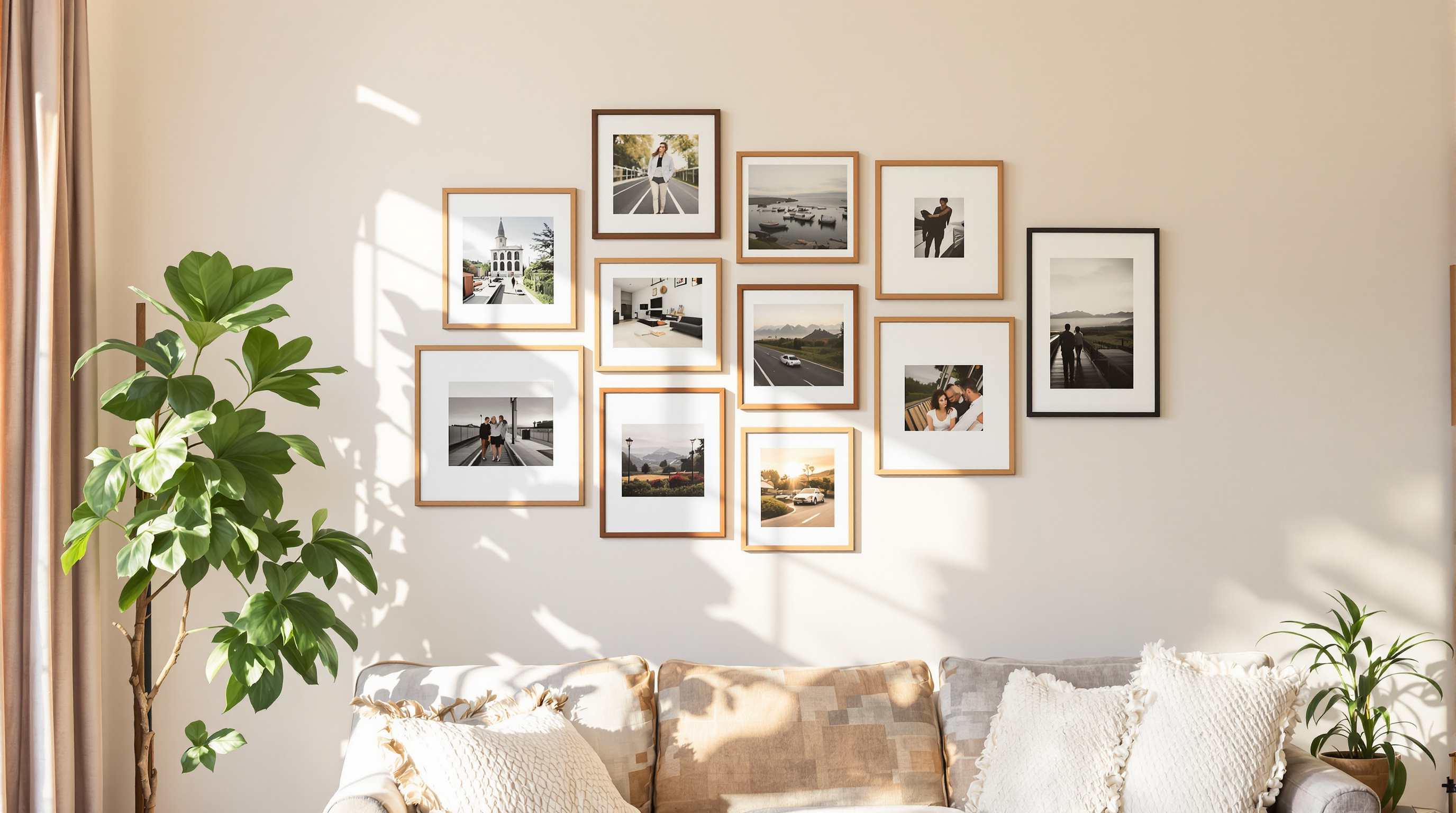
There is something deeply intentional about film photography. The grain, the tonal range, the slight imperfections — they all add up to images that feel alive in a way that digital prints sometimes cannot replicate. If you have been collecting film prints or recently had your negatives developed and scanned locally here in Louisville, you are sitting on the raw material for one of the most personal and visually rich gallery walls you can imagine. This guide walks you through everything you need to know to do it right.
Understanding Film Print Sizing Before You Plan Your Wall
Before you start hammering nails, you need to understand how film print sizing works, because analog formats do not follow the same proportions as standard digital or smartphone photos. This is one of the most overlooked steps and it affects every decision you make about framing and layout.
The most common film formats and their native aspect ratios are:
- 35mm film (standard) — produces a 3:2 aspect ratio. Common print sizes include 4×6, 8×12, and 12×18 inches.
- 35mm panoramic / half-frame — half-frame shoots 2:3 vertically; panoramic crops vary widely.
- Medium format 6×6 — square format, ideal for 8×8, 10×10, or 12×12 inch prints.
- Medium format 6×7 — produces a nearly square 7:6 ratio, prints beautifully at 10×12 or 14×17 inches.
- Medium format 6×4.5 — a 4:3 ratio, compatible with 8×10 or 11×14 frames with minimal cropping.
When mixing formats on a gallery wall, do not force all prints into the same frame size. Doing so means cropping your negatives in ways that destroy composition. Instead, embrace the variety of sizes — it is what gives a film gallery wall its organic, layered character. When ordering prints in Louisville, ask your lab (or your scanning service) to print to the native aspect ratio of your format, then source frames that match those dimensions exactly.
Gallery Wall Layout Tips for Mixed Format Film Prints
A well-designed gallery wall is not random — it follows a visual logic, even when it looks effortlessly loose. For film prints in mixed formats, the following layout strategies work especially well:
- Anchor with a large centerpiece. Choose your strongest image — perhaps a medium format landscape of Kentucky countryside or a candid portrait — and print it large (14×17 or 16×20). Build everything else around it.
- Balance by visual weight, not symmetry. A large black-and-white print on the left can be balanced by two or three smaller color prints on the right. You are balancing tone, contrast, and size simultaneously.
- Group by format or by subject. Consider clustering your 35mm street shots from Louisville's NuLu or Butchertown neighborhoods together, and your medium format portraits in a separate cluster. Proximity creates narrative.
- Use consistent frame depth. Mix frame colors (wood, black, white) if you like, but keep frame depth (the profile thickness) consistent — it unifies the wall visually even when nothing else matches.
- Leave breathing room. Space frames at least 2 to 3 inches apart. Film prints carry visual texture and grain — they need room to be read individually.
Before putting a single nail in your wall, lay all your frames on the floor in the arrangement you are planning. Live with it for a day. Walk past it, glance at it, adjust. Only then transfer the layout to the wall using paper templates taped up with painter's tape.
Framing Film Prints in Louisville — What to Look For
Framing analog prints deserves special attention because film photographs — especially those printed on fiber-based or resin-coated darkroom paper — are sensitive to long-term environmental damage. If you are having prints framed locally in Louisville, here is what to ask for:
- UV-protective glazing. Whether you choose glass or acrylic, UV filtering significantly slows color fading and silver degradation in black-and-white prints. This is non-negotiable for prints you want to last decades.
- Acid-free matting and backing. Acidic materials yellow prints over time. Any reputable Louisville framer will offer archival-quality mat boards and foam-core backing as standard.
- Float mounting for texture prints. If you have prints on textured darkroom paper, consider float mounting — where the print appears to hover above the mat — to showcase the paper's surface quality.
- Avoid flush-mounting film prints to backing. Unlike canvas or metal prints, analog photo paper needs to be able to expand and contract slightly with humidity. Rigid adhesive mounting can cause buckling over time.
Louisville has a growing community of film photographers, and several local frame shops are familiar with the specific needs of analog prints. When possible, support local framers who understand the difference between a darkroom silver gelatin print and a standard inkjet output — the treatment is genuinely different.
Film Photography as Home Décor — Making It Personal to Louisville
A gallery wall is more than decoration — it is a statement of what you see and how you see it. Film photography, with its commitment to slowing down and being present at the moment of capture, translates naturally into home décor that feels considered rather than assembled.
For Louisville residents, this is an especially rich opportunity. The city offers an extraordinary range of photographic subjects: the Ohio River waterfront, the historic architecture of Old Louisville (the largest Victorian neighborhood in the United States), the energy of the Highlands and Germantown, the Churchill Downs grandstand, the textures of local bourbon distilleries, and the faces of a community that takes deep pride in its identity.
When your gallery wall is built from your own film photographs of places you know and love, it becomes something no interior designer can replicate off a catalog. A roll of Kodak Portra 400 shot on a walk through Cherokee Park, a few frames of Ilford HP5 from a concert at Headliners, a medium format portrait of someone important to you — these are the building blocks of a wall that tells a story only you can tell.
Consider also mixing orientations deliberately: vertical prints add height to a room, horizontal prints anchor and widen a space. Square medium format prints act as visual anchors that neither push nor pull. A thoughtful mix of all three creates a dynamic rhythm that draws the eye across the entire arrangement.
Bringing It All Together
Building a gallery wall from film photographs is one of the most rewarding ways to honor the work you have put into shooting on analog. By respecting the native sizing of your film format, planning your layout with intention, choosing proper archival framing, and drawing from the rich visual landscape that Louisville and Kentucky offer, you create something genuinely lasting. Your wall will not just look good — it will mean something, and that is the whole point of shooting film in the first place.