Film Photo Wall Art in Louisville — How to Turn Your Analog Shots into Stunning Canvas Prints
TK Broecker / 5 July 2026
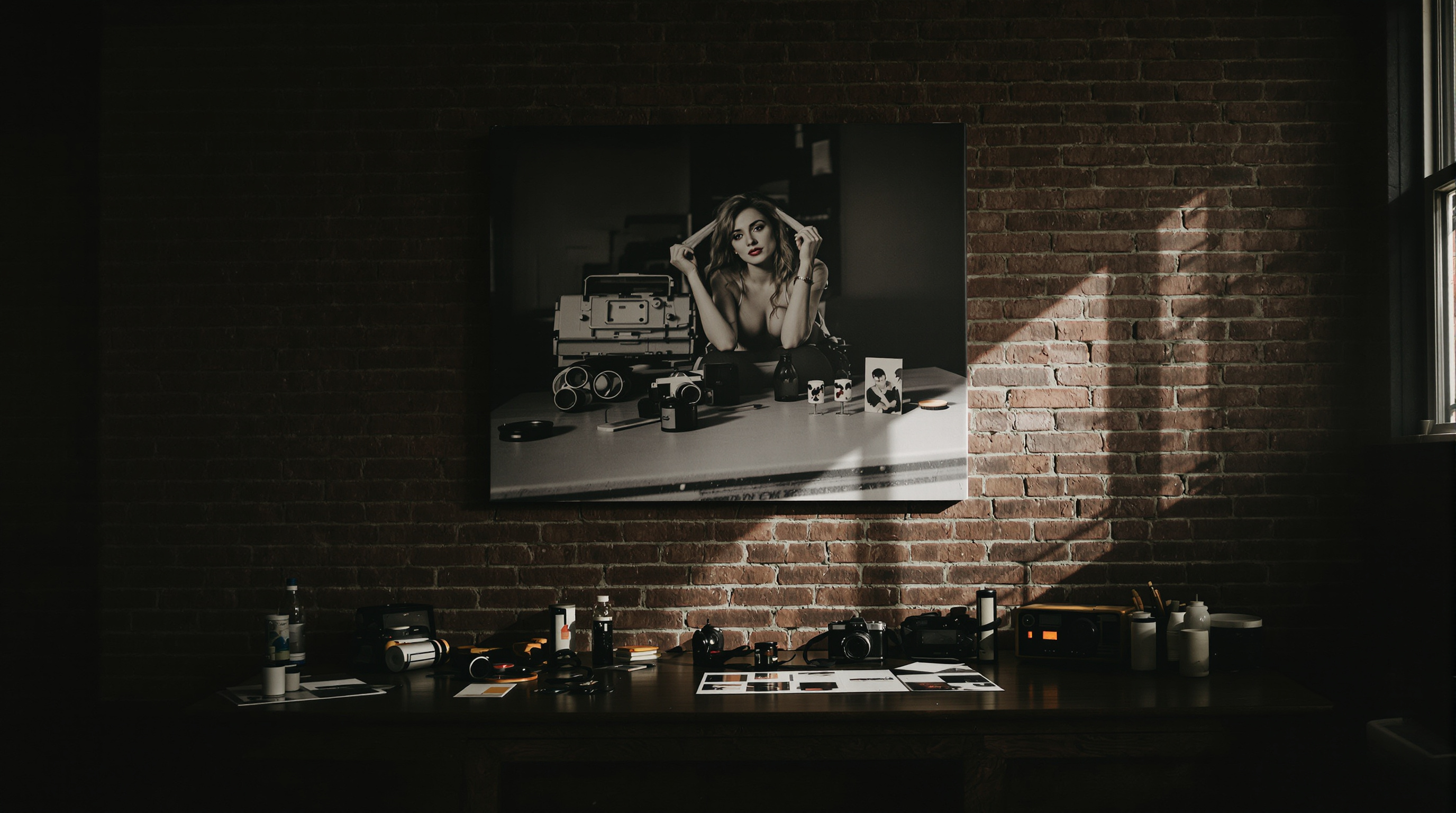
There is something undeniably compelling about film photography. The grain, the tonal depth, the slight imperfections — they all combine to create images that feel alive in a way that digital photos often struggle to replicate. If you are a film photographer in Louisville, Kentucky, or simply someone who has inherited a collection of analog snapshots, you may be wondering how to bring those images off the contact sheet and onto your walls. Turning film photos into canvas wall art is one of the most powerful ways to honor the medium — and Louisville has more options than ever to help you do it right.
Why Film Photography Makes Exceptional Wall Art
Film photography has seen a remarkable resurgence in recent years. Younger generations are drawn to it precisely because of the qualities that make it so well-suited to large-format wall display. Unlike digital images, which are captured as uniform pixel grids, film images are formed through a chemical reaction on light-sensitive emulsion. This creates:
- Organic grain structure — Film grain gives images a texture and warmth that reads beautifully at large sizes, especially on canvas.
- Rich tonal range — Particularly in black-and-white film, the transition between shadows and highlights has a depth that reproduces magnificently.
- Unique color rendition — Different film stocks like Kodak Portra, Fujifilm Pro 400H, or Kodak Ektar each have their own color signatures that lend finished prints a distinctly painterly quality.
- Emotional authenticity — The deliberate nature of shooting on film — limited exposures, no instant review — often results in images that feel more intentional and emotionally resonant.
All of these characteristics translate powerfully onto canvas. The slightly matte, textured surface of a canvas print complements film grain in a way that glossy photo paper simply cannot match, making canvas arguably the ideal medium for displaying analog photography.
From Film Negative to Canvas Print — The Technical Process
The journey from a film negative to a finished canvas print involves several precise steps, each of which affects the final quality of your wall art. Understanding the process helps you make better decisions — and ask the right questions of your print lab.
1. Developing your film. Before anything else, your exposed film must be developed. Color negative film (C-41 process), black-and-white film, and slide film (E-6 process) each require different chemical treatments. In Louisville, several labs offer film development, and it is critical to use a reputable one — poor development can introduce unwanted color casts, uneven density, or physical damage to the negative.
2. Scanning the negative. This is arguably the most important step for wall art quality. A high-resolution scan — ideally at 2400 DPI or higher for 35mm film, and proportionally less for medium format (120 film) or large format (4x5 inch sheet film) — captures the full detail of the negative. Drum scanners and high-end flatbed scanners like the Epson Perfection V850 Pro are considered the gold standard. Some Louisville labs offer professional-grade scanning services. For large canvas prints, you want a file that gives you at least 150–200 PPI at the intended print size.
3. Color grading and retouching. Scanned negatives typically need color correction, contrast adjustments, and sometimes dust or scratch removal. Skilled retouching preserves the film's natural character while correcting technical flaws.
4. Printing on canvas. The corrected digital file is then printed using a wide-format inkjet printer onto canvas material. Archival pigment inks are strongly recommended — they resist UV fading and can last 75–100 years or more under proper conditions. The printed canvas is then stretched over a wooden frame (called a stretcher bar), creating the classic gallery-wrapped look.
Choosing the Right Print Lab in Louisville for Your Film Photos
Not every print lab is equipped — or experienced — to handle film photography with the care it deserves. When searching for a print lab in Louisville, Kentucky to handle your film photo canvas prints, consider the following:
- Scanning capabilities: Ask about the scanner models they use and the maximum DPI they can achieve. For wall art, cutting corners on scanning resolution will hurt the final print.
- Experience with film negatives: Labs that specialize in film — rather than treating it as an afterthought to their digital workflow — will understand how to handle negatives, avoid Newton rings during scanning, and color-correct analog images accurately.
- Canvas and ink quality: Inquire about the canvas material (cotton vs. polyester blends) and whether they use archival pigment inks. These details determine how long your wall art will look its best.
- Stretcher bar construction: Quality canvas prints use kiln-dried wooden stretcher bars that resist warping. Ask whether the frames are braced at the center for larger prints.
- Local vs. online labs: Louisville residents have the advantage of being able to work directly with local print labs — seeing physical samples, discussing your specific negatives in person, and having greater control over the process. However, reputable online labs with strong film workflows can also be excellent options.
Do not hesitate to request a small test print before committing to a large canvas. A good lab will welcome this as a sign that you care about quality.
Designing Your Analog Photo Wall Display
Once your canvas prints are ready, the final challenge is designing a wall display that does justice to your analog images. A thoughtful arrangement can transform a collection of prints into a cohesive, gallery-worthy installation.
Consider size and scale. A single large canvas — 24x36 inches or bigger — of a particularly striking image can serve as a bold focal point in a living room or hallway. Alternatively, a grid of smaller canvases (for example, a 3x3 arrangement of 8x10 prints) works beautifully for storytelling — think a road trip series, a family portrait session, or a collection of street photography.
Mix formats intentionally. Film photographers often work in multiple formats — 35mm, medium format square (6x6 cm), or panoramic. Displaying prints that reflect the native aspect ratio of the film format adds authenticity. A row of square medium format prints has an elegant, distinctive rhythm on a wall.
Think about lighting. Canvas prints, unlike framed prints behind glass, can be displayed without worrying about glare. However, directed lighting — such as picture lights or track lighting — can dramatically enhance the texture and depth of both the canvas surface and the film grain within the image.
Embrace the analog aesthetic in your décor. Film photo wall art tends to pair beautifully with warm, tactile interiors — exposed brick, natural wood, linen textiles, vintage furniture. In Louisville's many historic homes and converted spaces, this aesthetic feels especially at home.
Conclusion
Film photography carries a richness and intentionality that makes it uniquely suited to large-format wall display. For Louisville photographers and film enthusiasts, the process of going from a raw negative to a finished canvas print is a deeply rewarding one — requiring care at every stage, from developing and scanning to printing and hanging. By choosing the right local print lab, insisting on archival quality materials, and designing your display with intention, you can create analog wall art that will be a lasting presence in your home for decades to come.