Fall Film Photography in Louisville — Capturing Autumn Magic on Analog
TK Broecker / 27 September 2026
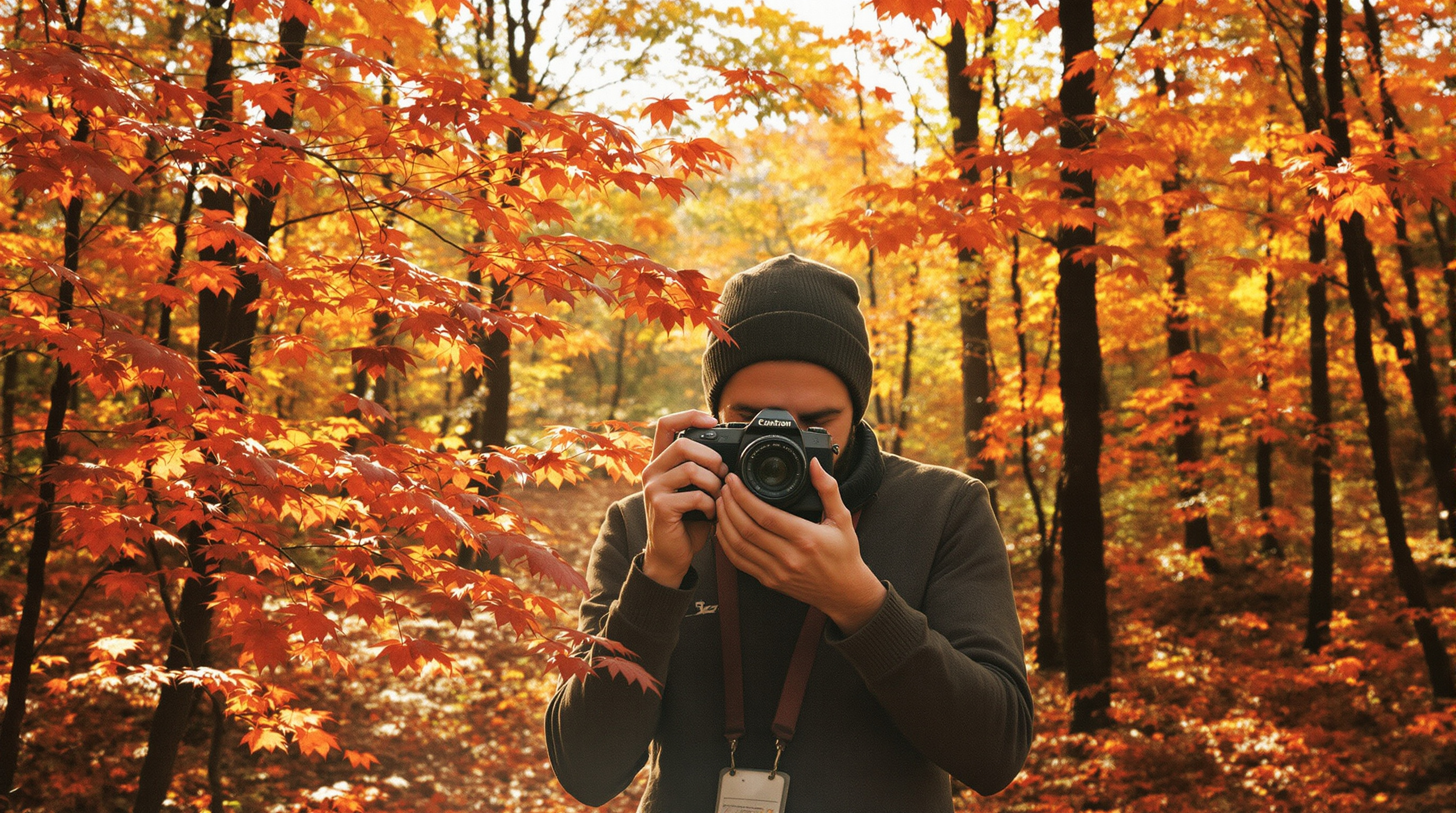
There is something undeniably romantic about shooting fall foliage on film. In Louisville, Kentucky, where autumn transforms the city into a canvas of deep reds, burnt oranges, and golden yellows, analog photography finds its perfect subject. The organic grain, warm color rendition, and the deliberate pace of shooting on film align beautifully with the slow, contemplative season of autumn.
Why Film and Fall Are a Perfect Match
Digital sensors capture what is there. Film interprets it. This distinction becomes especially meaningful in autumn, when light turns golden, shadows grow long, and color takes on an almost painterly quality. Film emulsions — particularly those with warm color biases — respond to the red and orange spectrum of fall foliage in ways that digital cameras often struggle to replicate naturally.
The color rendition of analog film is rooted in the chemical interaction between silver halide crystals and light. Films like Kodak Gold 200 and Kodak Ultramax 400 are widely celebrated for their warm, saturated tones, making them ideal for autumn shooting. Kodak Gold 200, in particular, has a well-documented tendency to push warm tones — reds, oranges, and yellows — toward a rich, almost honeyed quality that pairs perfectly with fall leaves. Its grain is fine enough for sharp detail but visible enough to give images that tactile, organic feel that has made it a favorite among film photographers worldwide.
For those seeking something more cinematic, Kodak Colorplus 200 offers a similar warm palette at a lower price point, while Fujifilm Superia X-TRA 400 leans slightly cooler but renders greens and yellows with exceptional vibrancy — useful when shooting in shaded woodland areas where the light is more diffused.
If you prefer slide film for its punchy contrast and vivid saturation, Kodak Ektachrome E100 is an outstanding choice. Slide films render fall colors with striking accuracy and brilliance, though they demand precise exposure — a challenge that adds to the rewarding discipline of analog shooting.
Best Film Stocks for Autumn Colors
- Kodak Gold 200 — warm tones, fine grain, excellent for golden hour shooting
- Kodak Ultramax 400 — versatile speed, slightly more saturated, great for overcast fall days
- Fujifilm Superia X-TRA 400 — cooler palette, vivid greens and yellows, good in shade
- Kodak Ektachrome E100 — slide film, stunning saturation and contrast, requires careful metering
- Lomography Color Negative 400 — punchy and slightly unpredictable, great for creative fall shots
Top Louisville Locations for Fall Film Photography
Louisville is blessed with an abundance of photogenic fall locations, each offering a distinct character for analog photographers.
Cherokee Park is arguably the crown jewel of fall photography in Louisville. Designed by the legendary landscape architect Frederick Law Olmsted — who also designed New York's Central Park — Cherokee Park features winding roads, open meadows, and dense tree canopies that erupt in color each October and November. The park's rolling terrain creates natural layers of foliage, ideal for composing depth-rich film frames. Early morning visits reward photographers with soft, diffused light and occasional mist rising from the creek beds.
Bernheim Arboretum and Research Forest, located about 25 miles south of Louisville in Clermont, Kentucky, is a must-visit for serious fall film photographers. Its 16,000 acres include curated arboretum sections where trees from around the world turn spectacular colors in autumn. The diversity of species means peak color is staggered — offering an extended window for photography that can span several weeks.
Big Rock at Beargrass Creek and the surrounding trail system offer a more intimate, urban-natural experience. Towering sycamores and maples line the creek banks, creating tunnel-like corridors of color that are extraordinary when backlit by afternoon sun.
Cave Hill Cemetery is one of Louisville's hidden gems for photography. Founded in 1848, it is a National Historic Landmark and a Victorian-era garden cemetery that doubles as an arboretum. In fall, its ancient oaks, maples, and sweet gums turn into a breathtaking tapestry of color. The cemetery's quiet, reflective atmosphere suits the meditative pace of film photography perfectly.
Waterfront Park along the Ohio River offers a different kind of fall composition — sweeping river views framed by autumn trees, with the Louisville skyline as a backdrop. Golden hour light on the water combined with fall foliage can yield extraordinary results on warm-toned film stocks.
Techniques and Tips for Shooting Fall Foliage on Film
Shooting fall colors on film requires a slightly different approach than digital photography. Because you cannot preview your results instantly, understanding light, exposure, and film behavior becomes essential.
Shoot in golden hour light. The low-angle light of early morning and late afternoon in autumn is exceptionally warm. When combined with a film stock like Kodak Gold 200, this light produces images with an almost glowing quality. Avoid the flat, cool light of midday unless you are deliberately seeking a muted, melancholic aesthetic.
Meter for the highlights. Fall foliage, especially backlit leaves, can fool a light meter into underexposing. When shooting bright orange or yellow leaves against a bright sky, consider using spot metering or exposing slightly to the right of your meter's recommendation to preserve highlight detail in the foliage.
Use a lens hood. Backlit shooting — placing the sun behind or through the leaves — is one of the most rewarding techniques in fall photography, producing stunning rim light effects. However, it makes lens flare a real risk. A lens hood is essential, and with older film-era lenses common among analog shooters, coating quality may be less resistant to flare than modern glass.
Slow down and be selective. A roll of 35mm film gives you 36 frames. A roll of medium format gives you even fewer. This constraint, often cited as one of analog photography's greatest gifts, encourages deliberate composition and patience. Walk through Cherokee Park or Bernheim for an hour before raising the camera. Find your frame. Wait for the light.
Consider cross-processing or pushed development if you want to heighten the drama of your fall images. Pushing a film like Kodak Ultramax 400 by one stop increases contrast and grain, deepening shadows and intensifying the warm tones of autumn foliage. Discuss options with your local film lab in Louisville — several excellent labs in the city offer custom development services.
Conclusion
Fall in Louisville is one of the most visually rich seasons a film photographer could hope to shoot. From the Olmsted-designed paths of Cherokee Park to the ancient trees of Cave Hill Cemetery, the city and its surroundings offer endless analog opportunities. Choose a warm-toned film stock, embrace the discipline of shooting intentionally, and let the chemistry of film do what it does best — transform autumn light into something timeless.