Mastering Film Push and Pull Processing for Better Exposures
T.K. Broecker / 29 March 2026
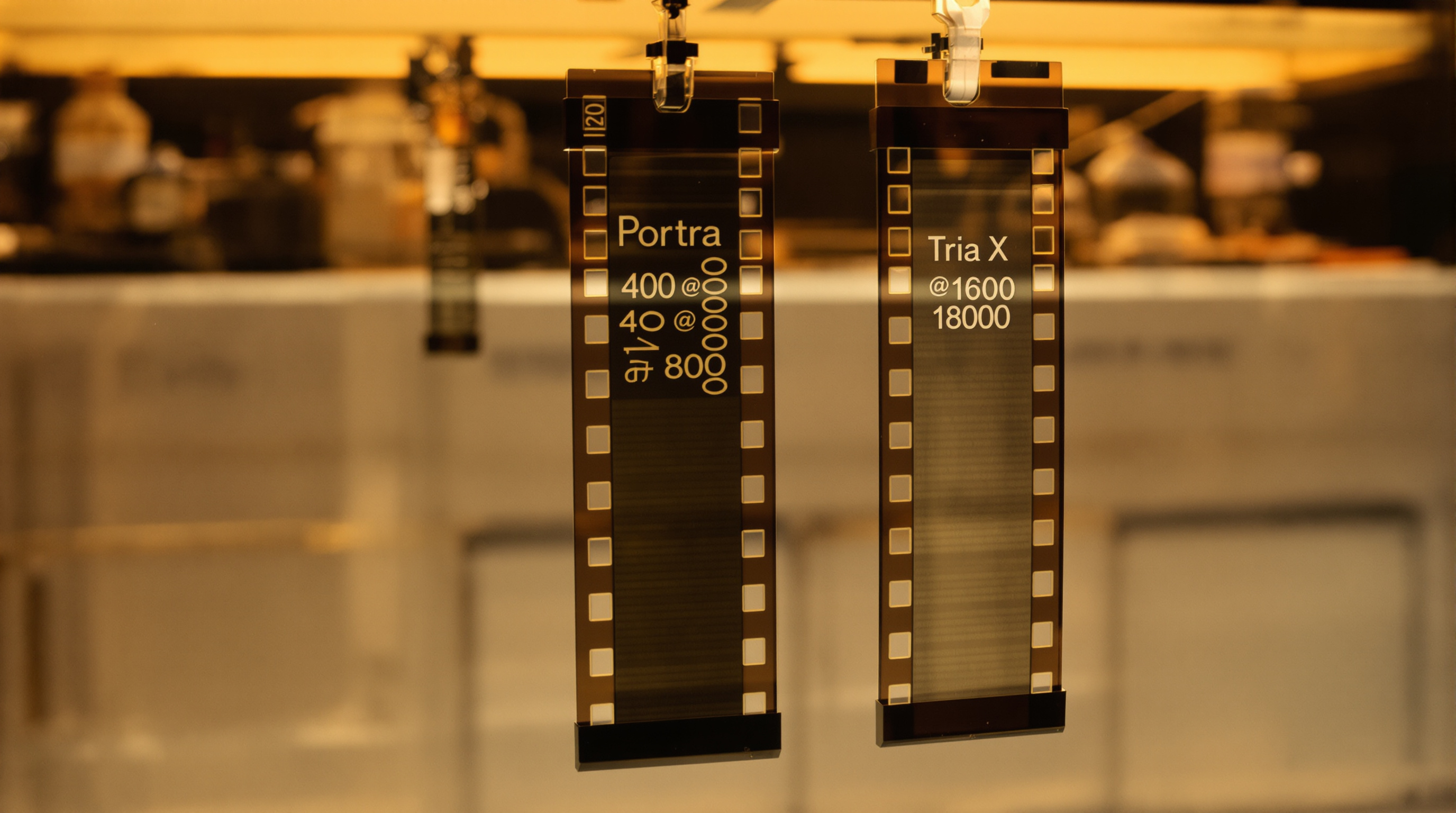
Push & Pull Processing Film: Portra 400 at 800, Tri-X at 1600, & Scanning Tips
Film photography offers unique creative controls that digital can't replicate. Among these, push and pull processing—techniques where you intentionally rate your film at different speeds than box speed and adjust development accordingly—stand as powerful tools in the analog photographer's arsenal. From rescuing underexposed shots to deliberately enhancing contrast and grain, understanding these techniques can transform your 120 format and 35mm film results.
Understanding Push and Pull Processing Basics
Push processing involves rating film at a higher ISO than its box speed (underexposing) and then extending development time to compensate. Conversely, pull processing means rating film at a lower ISO (overexposing) and reducing development time. These techniques originated from necessity—photojournalists often needed to shoot in low light without flash—but have evolved into creative choices.
What pushing typically changes
- Increased contrast - Shadow areas remain relatively unchanged while highlights gain density
- Enhanced grain structure - More pronounced grain becomes visible
- Shifted color rendition (for color films) - Often resulting in more saturated colors with slight color shifts
The chemistry behind these processes is fascinating. When you push film, the extended development time allows the developer to work harder on the limited silver halides that have been exposed, effectively amplifying the latent image. For a broader look at how these analog techniques fit into modern photography, the discussion of film photography in the digital age provides useful context.
Rating Portra 400 at 800: The Perfect Moderate Push
Kodak Portra 400 has earned its reputation as one of the most flexible color negative films, with exceptional exposure latitude. Rating it at ISO 800 represents a one-stop push that delivers particularly pleasing results.
What to expect
- Slightly increased contrast that adds punch without becoming harsh
- Marginally more visible grain that adds character without becoming obtrusive
- Colors that become somewhat more saturated while maintaining Portra's famous skin tone rendition
Pushing Tri-X to 1600: The Classic Photojournalist Technique
Kodak Tri-X has been pushed to ISO 1600 by generations of photojournalists since its introduction in 1954. This iconic black and white film responds exceptionally well to pushing, creating a distinctive aesthetic that has documented countless historic moments. According to DIY Photography, pushed black and white film remains one of the most sought-after looks among analog photographers precisely because it can't be cleanly replicated in post-processing.
At ISO 1600, Tri-X exhibits
- Dramatically increased contrast - Deep blacks and bright highlights create a striking chiaroscuro effect
- Enhanced grain structure - The characteristic Tri-X grain becomes more pronounced, adding a gritty, documentary feel
- Improved shadow detail retention compared to other films pushed to similar degrees
Rescuing Underexposed Film and Optimal Scanning
Sometimes pushing isn't planned but becomes necessary to rescue underexposed film. Whether due to meter malfunction, incorrect camera settings, or unexpected lighting conditions, push processing offers salvation for frames that would otherwise be lost.
Options for severely underexposed film
- Stand development - Using diluted developer (1:100) and extremely long development times (1-2 hours) with minimal agitation
- High-energy developers - Products like Kodak XTOL or HC-110 can extract maximum detail from underexposed negatives
- Extended push processing - In extreme cases, pushing 3+ stops may salvage basic image detail
Scanning tips for pushed film
- Increase scan resolution to better handle the enhanced grain structure
- Adjust contrast curves to tame excessive contrast while preserving the pushed aesthetic
- Consider slight noise reduction that targets grain clumping without destroying the characteristic film texture
- For color pushed film, individual channel adjustments may be necessary to correct color shifts
Push and pull processing expand the creative potential of film photography far beyond box speed limitations. From rating Portra 400 at 800 for subtle enhancement to pushing Tri-X to 1600 for dramatic documentary results, these techniques offer both practical solutions and artistic choices. As you experiment with different films and pushing degrees, you'll develop preferences that become signature elements of your photographic style. The unique aesthetics of pushed film—with its characteristic contrast, grain, and color shifts—continue to draw photographers to these techniques even in the digital age.