Film Photography Printing Guide - From Paper Types to Perfect Presentation
T.K. Broecker / 22 March 2026
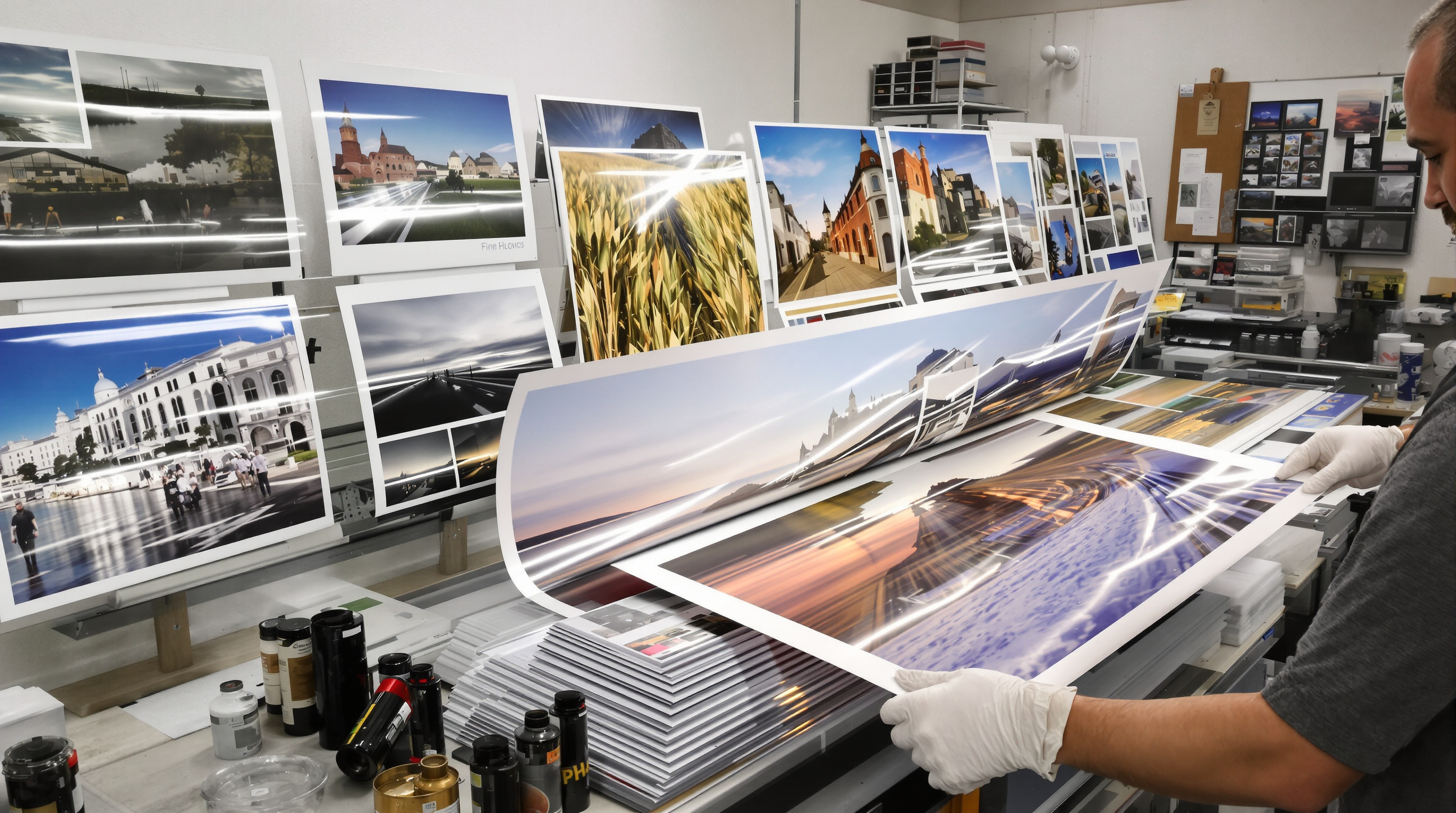
Printing Film Photos: Glossy vs Luster, Metallic, Fine Art Papers & Pro Tips
In the digital era, film photography continues to captivate enthusiasts with its unique character and tangible process. Once you've developed your film, choosing the right printing method and paper becomes crucial for showcasing your artistic vision. Understanding the differences between glossy, luster, metallic, and fine art papers—along with proper handling and sizing considerations—can transform good photographs into exceptional prints that last for generations.
Understanding Glossy vs. Luster Photo Prints for Film
Glossy Photo Paper
Glossy photo paper offers maximum color vibrancy and contrast with a reflective, shiny finish. When printing film photographs, glossy paper excels at reproducing the rich tones and deep blacks characteristic of film negatives, particularly for high-contrast black and white photography. The glossy surface allows light to reflect directly, creating a perceived sharpness that many photographers desire.
Luster Photo Paper
Luster photo paper (sometimes called semi-gloss or pearl) provides an excellent middle-ground solution. With a subtle texture that resembles traditional darkroom paper, luster offers nearly the same color intensity and contrast as glossy while minimizing reflection problems. The slightly textured surface makes fingerprints much less visible, making these prints more practical for handling and display.
Metallic Photo Prints: Bringing Film Images to Life
Metallic photo paper represents one of the most dramatic presentation options for film photography. These papers contain actual metallic particles in their coating, creating a dimensional, pearlescent effect that's particularly striking with certain types of images. Metallic photo prints from a professional lab bring out the best of high-contrast film images in a way that standard papers simply can't match.
Images that shine on metallic paper
- Images with bright highlights and deep shadows
- Photographs featuring water, metal, or glass
- Urban landscapes with reflective surfaces
- High-contrast black and white film images
The metallic base enhances the three-dimensional quality of film photographs, adding depth that standard papers cannot match. Colors appear more saturated, blacks more intense, and highlights seem to glow from within the paper itself. Many photographers find that certain film stocks—particularly those known for vibrant color rendition like Kodak Ektar or Fuji Velvia—pair beautifully with metallic printing.
Fine Art Papers for Archival Film Printing
Fine art papers offer unparalleled texture, depth, and archival quality for serious film photographers. Unlike standard photo papers, these materials often contain cotton or alpha-cellulose fibers that create distinctive tactile surfaces and exceptional longevity. According to B&H Explora, substrate choice is one of the most overlooked variables in the fine art printing process — the paper itself becomes part of the image.
Fine art paper options
- Cotton rag papers - Made from 100% cotton, these acid-free papers offer excellent archival properties (100+ years when properly stored) and a distinctive textured surface that enhances film grain in a pleasing way
- Baryta papers - Containing barium sulfate, these papers recreate the look of traditional darkroom prints with exceptional tonal range, making them perfect for black and white film negatives
- Platine or Platinum papers - These specialty papers feature an extremely smooth surface designed to showcase the subtle tonal transitions that film excels at capturing
While more expensive than standard photo papers, fine art prints offer longevity and aesthetic qualities that serious collectors and galleries expect. For archival presentation of important film work, these papers represent the gold standard.
Professional Printing Considerations: Size, Labs, and Handling
Printing film at larger sizes like 12x36" panoramic formats requires careful consideration of both the film itself and the printing process. Medium and large format films (120, 4x5, etc.) naturally support significant enlargement, but even 35mm can produce excellent large prints with proper technique. Photographers throughout Kentucky — including those in smaller cities like Owensboro, Ashland, and Elizabethtown who don't have access to a local professional lab — can order large format photo prints online and have them delivered directly. The Print Refinery Louisville East handles everything from standard sizes up to large wall prints, and The Print Refinery network makes professional-quality output accessible statewide.
When choosing a lab for large film prints
- Scanner quality - Drum scanners generally produce superior results for large prints compared to flatbed scanners
- Printer resolution - For detailed film prints, look for labs using printers capable of at least 720 DPI
- Color profiling - Professional labs should offer custom color profiling specific to film stocks
- Proofing options - Request smaller proof prints before committing to expensive large formats
Handling and storage
- Use cotton gloves when handling any photographic print
- Store unframed prints in acid-free sleeves or folders
- For framed prints, use UV-protective glass or acrylic to prevent fading
Display choices
- Choose luster or matte papers for prints displayed in areas with variable lighting
- Paper choice affects mounting options and framing workflow
- For valuable prints, consider museum-quality framing with acid-free matting and proper spacing
The journey from film negative to finished print involves numerous decisions that significantly impact the final presentation. By understanding the unique characteristics of different printing papers—from glossy's vibrant but delicate surface to the archival quality of fine art options—photographers can select the perfect medium for each image. Whether seeking the dimensional quality of metallic prints or the classic look of luster paper, these choices celebrate film photography's enduring appeal in a digital world. For a deeper look at how to pair your film photography workflow with the right output options, the guide to the art and science of print finishes is a natural next read. When properly printed, mounted, and displayed, film photographs offer a depth and permanence that continues to distinguish this timeless medium.