120 Film Developing in Louisville — Your Complete Guide to Medium Format Photography
TK Broecker / 3 May 2026
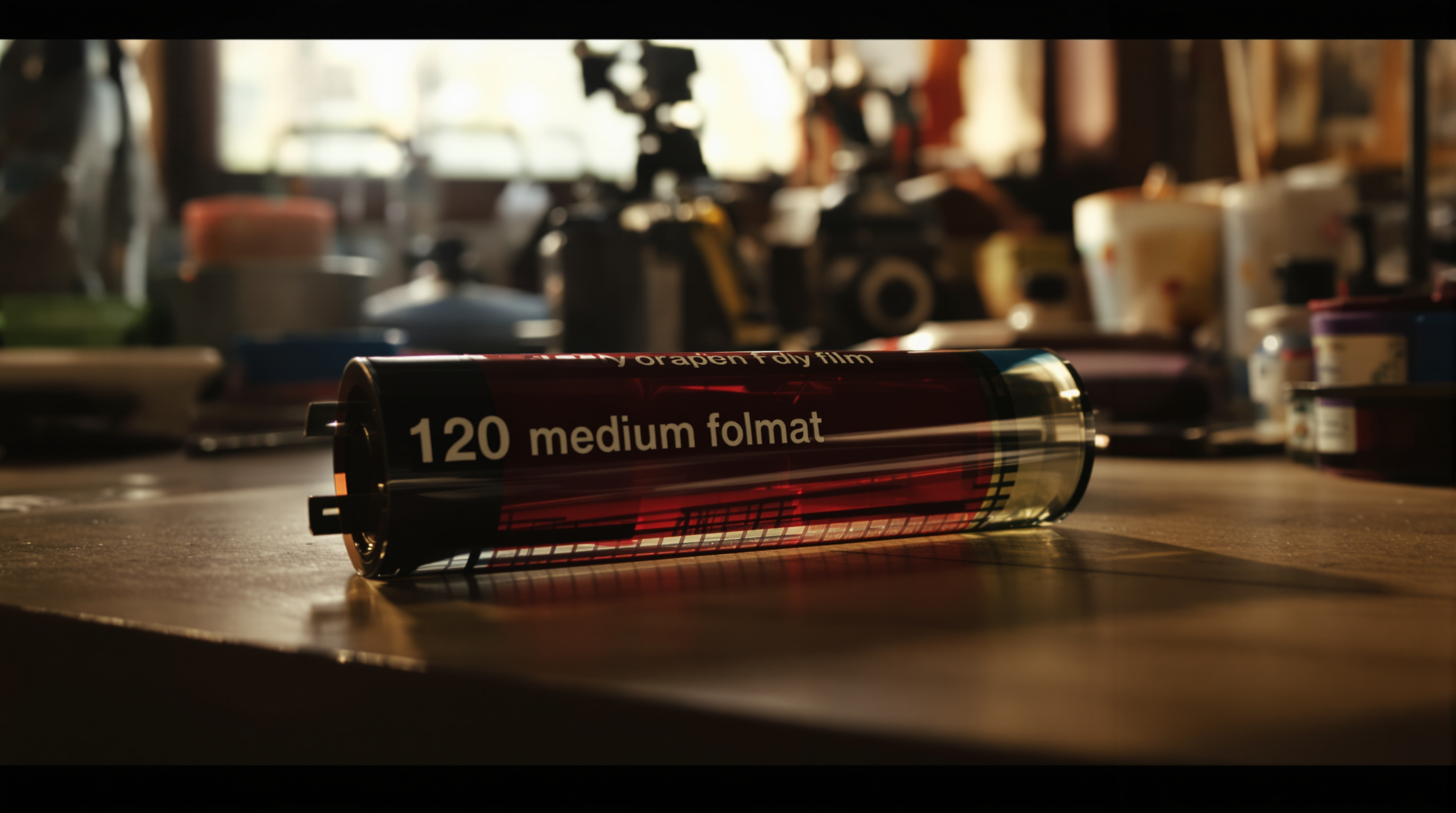
Medium format film photography is experiencing a powerful resurgence among both seasoned photographers and curious newcomers. At the heart of this revival is 120 film — a roll film format that delivers stunning image quality far beyond what 35mm can offer. Whether you're shooting locally in Louisville or anywhere across Kentucky, understanding the medium format world is the first step toward extraordinary images.
What Is 120 Film and Why Does It Matter?
120 film is a roll film format introduced by Kodak in 1901, originally designed for the Brownie No. 2 camera. Unlike 35mm film, which has perforations along its edges, 120 film is backed only by a paper leader, making it wider and capable of capturing a significantly larger image area. The standard roll provides enough film for between 8 and 16 exposures, depending on the image format used by your camera.
The larger negative size is the defining advantage of medium format. A bigger negative captures more light, more detail, and produces finer grain when enlarged. This translates directly into richer tonal gradations, more nuanced shadows and highlights, and images that simply have a different presence compared to smaller formats. For portrait photographers, landscape artists, and commercial shooters, this quality difference is not subtle — it is transformative.
6x6 vs 6x7 — Choosing Your Medium Format Frame
One of the most important decisions a medium format photographer faces is choosing between frame sizes. The two most popular are 6x6 cm and 6x7 cm, and each has a distinct character.
- 6x6 (Square Format): Cameras like the iconic Hasselblad 500 series and the Rolleiflex TLR shoot a perfect square negative. This format encourages a centered, symmetrical compositional approach and eliminates the need to rotate the camera for portrait or landscape orientation. It yields 12 exposures per roll. The square format has deep roots in fine art and fashion photography.
- 6x7 (Ideal Format): Often called the "ideal format," the 6x7 negative is roughly proportional to an 8x10 inch print, making it beloved by studio and portrait photographers. Cameras like the Mamiya RB67 and Pentax 6x7 are celebrated workhorses of this format, yielding 10 exposures per roll. The slightly rectangular frame feels more natural to photographers transitioning from 35mm.
Beyond these two, 120 film also supports 6x4.5 (645), 6x8, 6x9, and even panoramic 6x12 and 6x17 formats on compatible cameras, but 6x6 and 6x7 remain the most widely used and best supported by local labs.
Why Shoot Medium Format Film in the Digital Age?
With digital medium format backs now available, some ask why anyone would still shoot film. The answer is layered. First, the process itself is meaningful — loading a roll of 120 film, composing deliberately with only 10 or 12 frames, and waiting for developed results cultivates a mindfulness that digital shooting rarely demands. Each frame carries weight.
Second, the aesthetic qualities of medium format film are genuinely distinct. Film stocks like Kodak Portra 400, Ilford HP5 Plus, and Fujifilm Velvia 50 render color, contrast, and grain in ways that digital sensors still struggle to replicate convincingly. The organic, analog quality of a well-exposed 120 negative has a dimensionality that resonates with viewers on an almost tactile level.
Third, entry-level medium format film cameras — Mamiya C330s, Yashica Mats, older Hasselblad bodies — can be acquired for a fraction of the cost of a digital medium format system, making accessible quality one of the format's greatest selling points today.
Developing 120 Film in Louisville, Kentucky
Finding reliable 120 film processing in Louisville is easier than many film photographers expect. Louisville has a growing analog photography community, and several local labs and services cater specifically to medium format shooters. When choosing a lab, key considerations include:
- Film types supported: Confirm the lab processes C-41 (color negative), E-6 (slide/reversal), and black-and-white chemistry separately, as each requires different chemicals and processes.
- Scanning options: Most Louisville photographers want not just developed negatives but also high-resolution digital scans. Ask about scan resolution (measured in DPI or pixels per long edge) and whether the lab uses drum scanners, flatbed scanners, or dedicated film scanners like the Noritsu or Frontier systems.
- Turnaround time: Local Louisville labs typically offer faster turnaround than mail-in national services — sometimes as quick as 24–48 hours for standard processing.
- Handling care: Medium format negatives are large and more susceptible to dust and scratches. Ask how the lab stores and sleeved your negatives after processing.
If no local option fully meets your needs, reputable mail-in labs in the broader United States — such as The Darkroom in California or Indie Film Lab in Alabama — also accept 120 film rolls from Louisville and across Kentucky, with prepaid mailers and online order tracking.
Conclusion
Medium format film photography, centered on the versatile 120 film roll, offers image quality, creative depth, and a deliberate shooting experience that remains unmatched at its price point. Whether you gravitate toward the elegant square of the 6x6 format or the proportional beauty of the 6x7, shooting medium format in Louisville and Kentucky has never been more accessible. Find a trusted local lab, load a roll, and discover what larger film can do for your vision.